

How Can a Nun Defend a Criminal?
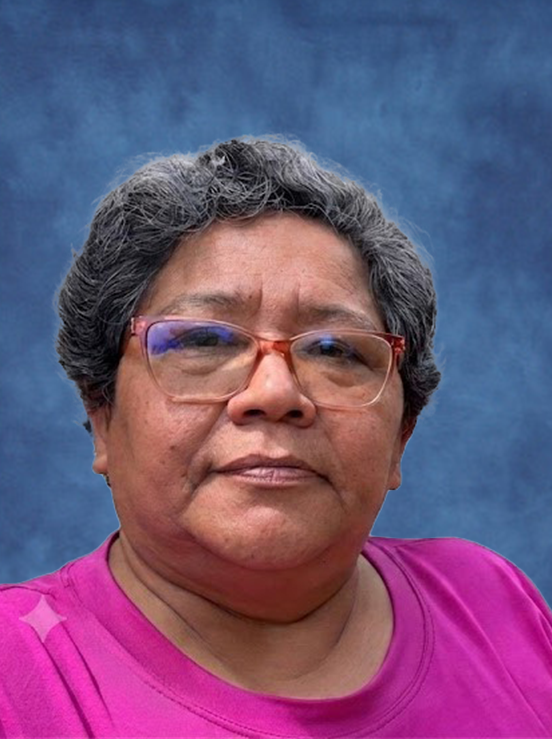
By: Sister Maria José Monteiro de Oliveira
That's the question I've heard more than once. They don't ask if I'm defending an accused person. They don't ask if I'm defending a suspect. They ask if I'm defending a criminal. I almost always answer immediately, as if I've repeated these words many times: I don't defend criminals. I seek to practice an act of faith and justice.
But after the conversation ends, I realize the question keeps echoing inside me. Looking at the Gospel, I see that Jesus did just the opposite. He never started with labels; he always started with the person.
Zacchaeus was known as a thief. Jesus said to him, "Come down quickly! I must stay at your house today."
The woman caught in adultery was condemned to her sin. Jesus replied, "Neither do I condemn you. Go and sin no more."
The leper was identified only by his disease. Jesus approached him and said, "I want to. Be cleansed."
The man from Gerasa was remembered for the violence and fear he inspired. After freeing him, Jesus entrusted him with a mission: Go home and tell everyone how much the Lord has done for you.
Even the thief crucified next to Jesus heard a promise that changed his life: "Today you will be with me in Paradise."
Jesus did not ignore the reality of any of them. But neither did he allow their identity to be reduced to the label that society had given them.
When people ask me, “How can a nun defend a criminal?”, I realize that the question stems from a premise: that some people cease to deserve to be seen as children of God. The Gospel does not allow me to believe this. Because no person loses their dignity because of sin, error, or even condemnation.
Throughout religious life we learn to recognize Christ in the poor, the sick, and the abandoned. We learn that each person possesses a dignity that is not taken away by suffering or by their own mistakes.
In the legal profession, however, this lesson takes on a very concrete form. Cases arrive laden with accusations, expert reports, testimonies, evidence, and decisions. It's easy to see only the case number or the crime described in the indictment. It's more difficult to realize that, before all of that, there is a person.
I recently followed a case that deeply affected me. Not because it was legally complex – although it was – but because it forced me to look beyond the pages of the court documents.
There was a deeply ill man there, marked by dependency, physical and mental frailty, and above all, by a painful experience of abandonment. A man whose story seemed to have been written by successive losses.
While studying the case, I understood that my mission was not to justify any errors, nor to deny the suffering of the people involved. My mission was different. It was to ensure that Justice saw that man as someone who was still human. Because justice fails to fully accomplish its mission when it only sees the fact and fails to see the person.
In the Gospel, Jesus never confused acceptance with approval of evil. He looked at each person in their truth, calling them to conversion when necessary, but never taking away their dignity. Perhaps this is the greatest challenge for those who live the practice of law as a vocation.
Do not defend error. Do not justify sin. But also do not allow anyone to be reduced to the worst moment of their existence.
When Jesus says, "I was in prison and you visited me" (Matthew 25:36), He doesn't ask
why that person was imprisoned. He simply reveals that He remains present where
most people prefer not to look. Perhaps it is precisely there that our faith is most challenged. Because loving those who love us is relatively simple. What is difficult is recognizing a child of God in someone whom everyone has already labeled as merely a criminal, problematic, or irredeemable.
Even today people ask me: How can a nun defend a criminal?
After much prayer about this question, I believe I have found an answer: I do not defend sin. I do not defend crime. I defend the dignity of the human person, because I believe that no human being ceases to be a child of God.
As a lawyer, I learned that justice is only truly just when it recognizes the dignity of each person. As a religious person, I learned that this dignity is not granted by men, but by God.
Perhaps that's why I've never been able to separate these two vocations. After all, before any accusation, any sentence, or any label, there is always a person. And it was...exactly for people that Jesus came.